



As occupational therapists working in nursing homes, we see daily how dementia not only affects cognition but also profoundly alters the body’s motor and sensory systems. Understanding these changes is essential to providing comfort, safety, and dignity for our clients.
Signalling Behaviour
People living with dementia often lose the ability to communicate needs verbally. Instead, they may use signalling behaviour: non-verbal cues such as fidgeting, pushing away, grimacing, or attempting to stand repeatedly.
These behaviours can be misinterpreted as agitation, but in reality, they are often signals of unmet needs such as discomfort, pain, or fatigue. Repetitive and searching movements are thought to be due to the loss of sensory integration function and the person is seeking out sensory input to feel where their body is in space and to feel safe.
Sensory System Disintegration
As dementia progresses, the integration of sensory information can become fragmented. The client may struggle to process touch, movement, balance, vision, and sound in a coordinated way. This can lead to hypersensitivity (overreaction) or hyposensitivity (reduced awareness), often explaining why a client leans, slides, or appears restless.
Paratonia
Paratonia, described extensively by Jo de Clercq, physiotherapist and innovation expert in dementia care in Belgium, is a form of involuntary resistance to passive movement common in dementia. Unlike spasticity, paratonia is variable and context-dependent: the person may suddenly stiffen or resist during transfers. Over time, this increased tone contributes to contractures, pain, and pressure injuries.
Recognising paratonia as neurological shifts our approach from routine handling to supportive facilitation. Jo de Clercq advocates for a low and slow approach to handling and self-care. Keeping the environmental sensory input quiet, moving slowly and providing handling and deep pressure that makes the person feel safe.
Immersion and Envelopment
Immersion can be defined as the depth to which a body will penetrate the supporting surface, whilst envelopment is the extent to which the supporting surface conforms to the body shape as it immerses. These two factors are recognised as key characteristics to improve pressure distribution and reduce the risk of pressure injuries.
Allowing the body to relax into the materials of the seating system for optimisation of contact to areas that need support. Essentially, we can use the seating system to create a ‘hug’ that allows the body to be well supported and cocooned by the cushion, back support, lateral supports, and head support.
We can use materials that conform to body shape, mould around the body to envelop and cradle weight-bearing segments (head, trunk, legs, pelvis, arms) and we can use modular systems that allow for improved contouring that can adjust over time to changes in body shape as the condition progresses.
Seating Systems for Support and Dignity
Specialised seating systems can make a profound difference for these clients.
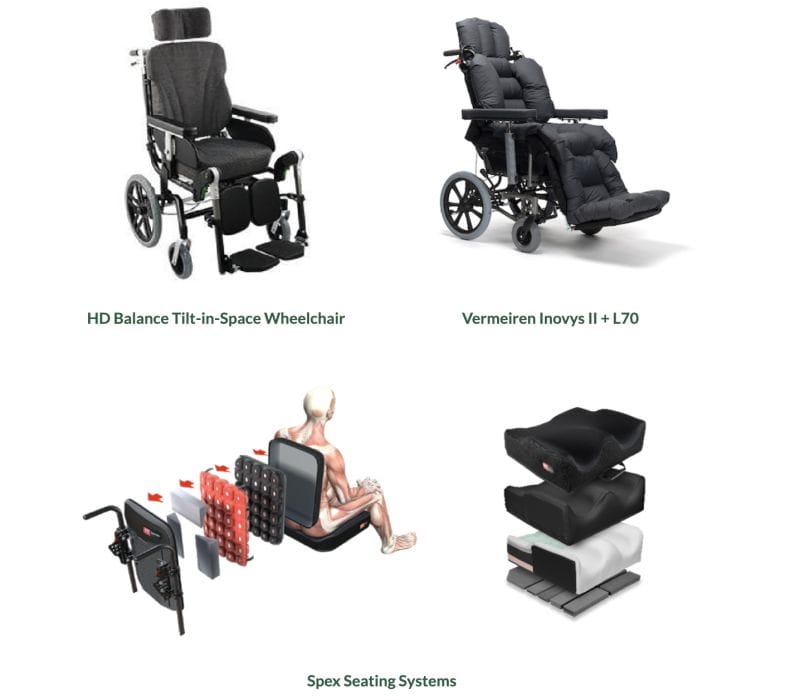
- HD Balance Tilt-in-Space Wheelchair – adjustable tilt and recline to allow pressure redistribution and reduce effort.
- Vermeiren Inovys II + L70 – combines tilt-in-space with the L70 cocooning support, enveloping the body to create safety and relaxation.
- Dynamic or contoured cushions – gel, air, or hybrid cushions reduce shear and improve immersion.
- Spex seating systems, head and lateral supports – stabilise posture when clients lean or lose midline orientation
Bed Positioning Systems for 24-Hour Care
Comfort and posture management extend beyond the chair into the bed environment:
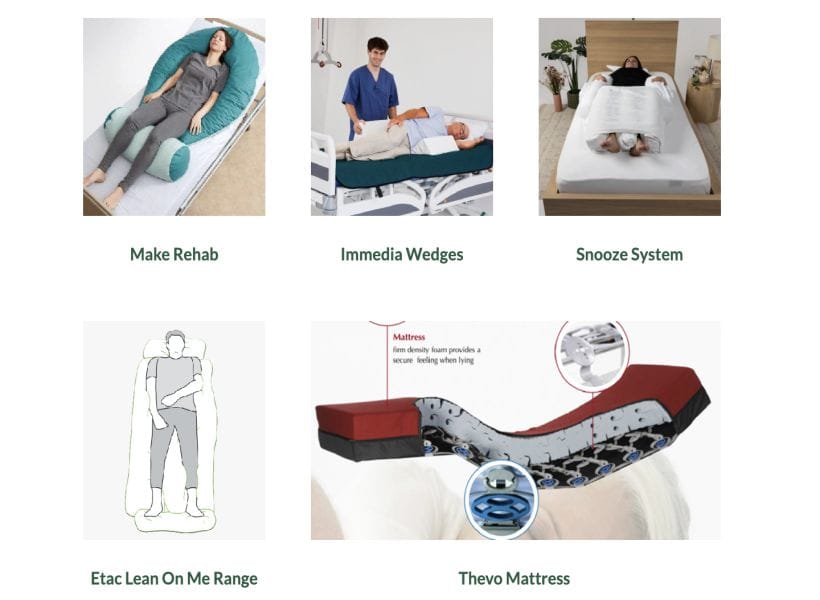
- Snooze Sleep System – modular supports maintain body alignment, reduce contracture risk, and improve sleep quality.
- Make Rehab positioning cushions –provide soft, adaptable 24-hour postural support that gently cocoons the body and maintains symmetry in lying. They reduce pressure, pain, and offer calming proprioceptive input, and meet infection-control cleaning standards for safe use in acute care settings.
- Etac Immedia Wedges – versatile positioning wedges that make repositioning safer and reduce shear.
- Etac Lean On Me Range – soft, stable positioning cushions providing cocooned body support and security.
- Thomashilfen Thevo Vital Specialist mattresses
In Conclusion
By recognising signalling behaviour as communication, understanding sensory disintegration, and respecting the challenges of paratonia, we can provide more compassionate, effective care. The right seating and bed positioning systems help preserve dignity and comfort for people living with dementia.
As Jo de Clercq reminds us:
“The body tells its story even when words are lost, our role is to listen, interpret, and respond with care.“
